
Recent Innovations In Improv
performers get paid, shorter classes, online comedy


In a recent episode of the terrific “Yes Also” podcast, Suzi Barrett and Ryan Rosenberg discussed this question “What’s the most recent innovation you’ve seen in improv?” This is in Bonus Episode Q&A #16.
Suzi mentioned she hasn’t really seen a lot of innovations like she used to in Chicago in the early 2000s. Ryan pointed out that while he couldn’t think of any innovations of doing improv, there were innovations of WHERE It was done: specifically in shows on the streaming service Dropout.
I loved this discussion! It made want to provide my own answer and I am now abou to do that. :)
Let’s take a crack at listing recent innovations in improv.
Paying Performers
Many innovations in improv are not on stage, but instead are changes to the business model of improv.
And the biggest change is that improvisers often get paid.
This was unheard of in the 2000s. Improv shows simply couldn’t sell enough tickets at high enough prices to really make this feasible.
But in the late teens, the big theaters like UCB were getting truly popular. And there was enormous pressure from the improv community for theaters to find a way to pay performers.
It’s happened! I’m thinking of tours like Ben Schwartz and Friends, or Off Book’s improvised musical shows. Also in Los Angeles there are premium ticket shows like Dinosaur Improv, Ultimate Improv Show, Holy Shit Improv and Fuck This Month where the audience is paying a medium-to-high price to watch improv, and the performers get paid for doing the show.
Even smaller shows usually have a policy of splitting the box office with performers if they sell enough tickets.
Podcasts paved the way for this, especially the early Earwolf shows. Comedy Bang Bang started touring in the early teens, and so did How Did This Get Made? These shows don’t have the word “improv” in their title, but they were unscripted performances being done by improvisers.
There is one casualty of this, and that is you don’t have as many dirt-cheap improv shows.
In the 2000s at UCB NY, almost every show was either five dollars or free. Yes, this made paying performers impossible, but it brought in young crowds that had high energy and an excitement for fast, fun improv.
Back then, the top performers would very often play in casual, low-expectations shows — I’m thinking of things like “Dirtiest Sketch Show” at UCB, or the holiday bit shows like Besser’s “It Sucked” awards.
Now those performers don’t show up for cheap shows.
I’m not saying we should go back to not paying performers. But I wish improv culture had more room for the throw-away cheap shows. Maybe free shows Monday-Thursday, and higher-ticket shows on Friday and Saturday.
Flexible Pricing for Classes
It used to be that every improv class was eight weeks long, with three hour sessions, for a fixed cost ($300 in the early 2000s, up to $500ish by 2020).
But improv communities have demanded a wider variety of pricing options. They want cheaper classes, shorter classes and more variety in what is taught.
And theaters have responded.
The Pack offers monthly memberships instead of buying everything a la carte. Schools in LA are way more likely to allow people’s “credits” from other schools to transfer. You don’t have to take as many classes to audition for teams, and often none at all.
My theater doesn’t have any auditions (and although you do have to take a class, you only need take one).
We Improv is really pushing the envelope in terms of offering a variety of ways to take classes. They’ve got monthly members, short classes, small class sizes and different curriculums depending on your interest.
More One Person Shows
At least in LA, more and more comedy shows are just one person on a stage. Clowning, “works in progress”, storytelling, Hollywood Fringe and of course stand-up: these generally feature one person at a time.
Although this doesn’t impact improv directly, it’s affecting the sketch world. When people are conceiving of comedy shows, they imagine just themselves on stage. They’re not designing comedy ideas for groups.
Where are the sketch groups? Or the bit shows that involve lots of people?
Tik Tok and Twitch
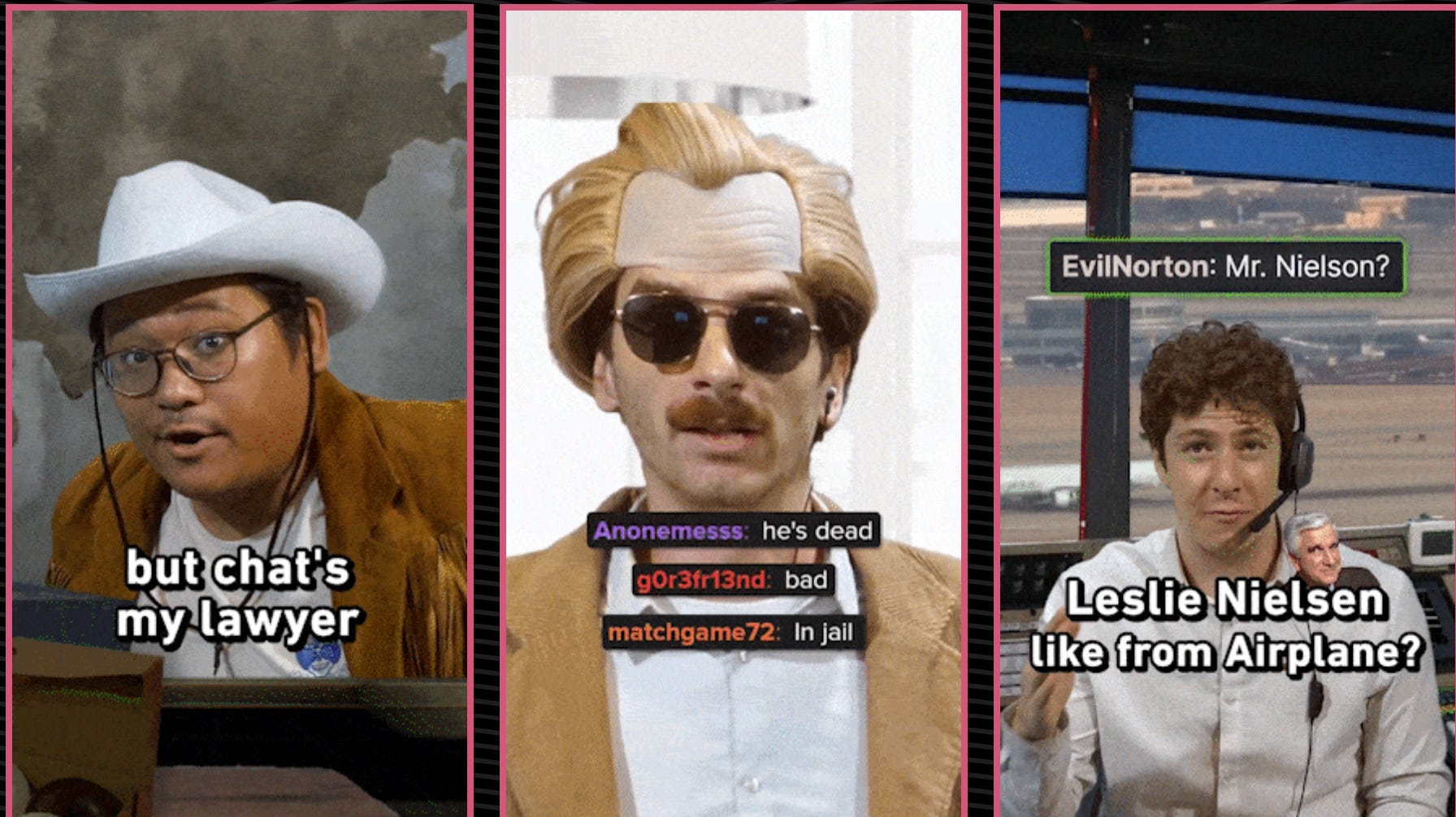
Maybe the sketch is all being done on TikTok, Instagram and Twitch.
I’ve written before about the success of Dropout and how it’s disrupting the improv word. But a key component to Dropout’s success was how well it dominated TikTok. The show “Game Changer”— where host Sam Reich challenges the contestants to perform a variety of comedic stunts (impersonations, act-outs, rats, musical improvs) produces so many viral clips.
Maybe one reason why there’s less innovation on stage is because it’s so hard to capture on film.
Consider the great Everything Now Show. These are college friends who have done improv for years and do a almost-daily show on their Twitch channel. With a wall of props and costumes, they and their guests do improvised bits with the audience at home heavily involved via the Twitch chat. It’s a funny and loose.
Check out ENS’ “What If The Social Network Was Wet?” sketch — I think I’ve linked this before, but I can’t help it!
Is that where the sketch energy has gone?
Honorable Mentions
A few others:
Clowning! Improvisers are studying clown and bringing new techniques into their shows: more physicality, more breaking the fourth wall, etc. I added this in after publication because a comment brought this up and it’s big enough that I wanted to include it.
Musical improv is making a big comeback in the LA scene.
“Game of the Scene” is mixing with “Discovery” (that’s what I call “playing the relationship”) and “narrative” a lot more in the small theaters.
Tag-outs are almost completely changed from physical taps on the shoulder to just waves.
What innovations have you noticed?
Plug: The And Camp

Myself and the other WGIS founders are the featured teachers at a new “improv camp” next fall. It’s called THE AND CAMP. September 17-20 in the Berkshires. It’s $699 for the whole kit and kaboodle: food, lodging, classes, etc. Lots of great NYC teachers (Shannon O’Neill, Sebastian Conelli, Ray Cordova, Elana Fishbein) in a beautiful setting! Tons of fun classes, shows and improv nerdery will abound!
We have sold about 1/3 of our tickets. Private cabins are booked. Groups of 6 can get their own cabin.
Plug: WGIS Intensives
If you’re more west coast oriented, WGIS is having intensives several times next year.
last week of Feb, first week of March
last week of April(we are not doing this one anymore!)last week of July, first week of August
Meant for out-of-towners, you come out for a week to LA (class does NOT provide lodging) for 8 sessions and a show of advanced instruction. They will be $375 for a week of classes.
There will be a simple application and if there’s a lot of demand, we’ll pick by lottery. They are not available yet but will be in a week or so. I’ll announce in this newsletter and the WGIS newsletter.
Really really truly truly I’m gonna get something announced this week! Er, maybe. No for sure!
Plugs: More Stuff
The World’s Greatest Improv School: The improv school I run with Jim Woods and Sarah Claspell. We’ve got classes online, in LA and even a few in NYC! You can join our mailing list if you want our weekly announcement of shows.
How to Be The Greatest Improviser On Earth - My improv book, available at Amazon. Kindle or print (also on my web site for more if you don’t want to buy from Amazon). It’s a hodge-podge of advice I wrote in 2016 about doing improv. If you’re short of funds and want a free PDF version just email me and I’ll send it over.
I was on Comedy Bang Bang this past week with Kumail Nanjiani and Charlie McCrackin. Episode 944 “Bones Are Important.” Stay tuned to the end to hear me steal Charlie’s hilarious character for a bit! Or don’t! Let’s face it, you don’t have to listen at all if you don’t want!
I've noticed more 2prov Smothers Brothers-type musical improv acts. I love it! It's about time!
Want to shout out Brooklyn Comedy Collective for keeping their 8 week classes at $375! They have a free weekly improvised sketch show called Demon Time which is a delight. BCC also pays pretty well if performers can drum up a good audience (ticket prices around $8-17). I think the biggest innovation I’ve seen as an improviser there are performers wanting to round out their improv with skills from clown and mime. And a recognition that those three art forms are really useful to one another.